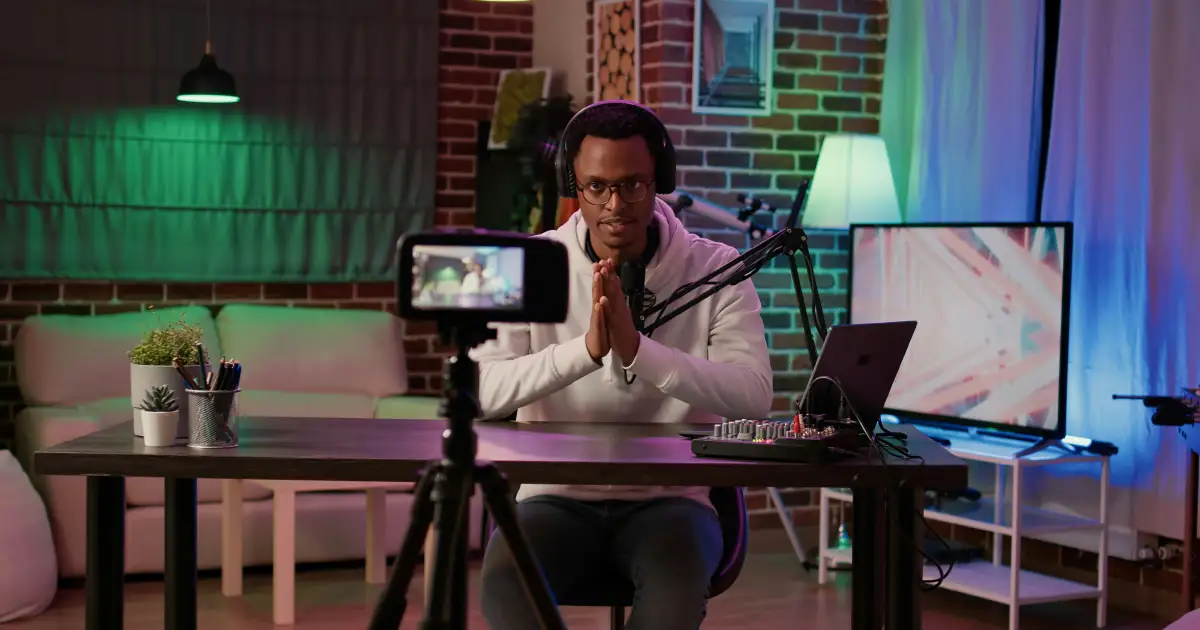
I know a videographer named Jake. He shoots weddings, commercials, and short films. His YouTube channel has 12,000 subscribers, not bad for a niche creator. But here's the interesting thing: 80% of his income doesn't come from YouTube. It comes from clients who found him through his portfolio on the site, received the finished work via private delivery, and returned again because they enjoyed the entire experience—from the first viewing to receiving the final files.
YouTube brought Jake an audience. But his money came from an infrastructure YouTube doesn't provide: an ad-free portfolio, private delivery of client work, exclusive content for Patreon subscribers, and a full-quality archive of originals.
This isn't a unique situation. For a growing number of content creators—videographers, directors, animators, editors, motion designers—the most valuable videos aren't public ones. This is the portfolio that gets you commissions. Client work that can't be made publicly available. Exclusive to supporters. Originals that no one but the artist has.
Public platforms are great for reach. But they're designed around the platform's goals, not yours: algorithms decide who sees your work, ads play before it, recommendations lead viewers to a different channel, and compression blurs the image you spent hours creating in DaVinci Resolve.
Portfolio: The Main Selling Point—and the Most Vulnerable
Your portfolio is where people decide whether to hire you. The first 10 seconds on your page are critical. The client clicks Play, sees your work, and either continues watching or moves on to the next candidate.
What happens if your portfolio is built on a YouTube embed:
The client opens your page. Above the video is the YouTube logo. Next to it is the "Watch on YouTube" button. The video ends, and a grid of recommendations appears: wedding videos from other creators, competitors' commercials, a random travel vlog. The client clicks. They've left your website. Maybe they'll come back. Most likely, they won't.
Or: a client at a large bank opens your portfolio in the office. The corporate firewall blocks YouTube. Instead of a video, there's a gray rectangle. The client won't bother with a VPN for your portfolio. They'll move on to the next candidate.
Or: a 15-second ad for a bank deposit plays before your carefully crafted showreel. The first impression is that it's someone else's ad, not your work.
A professional portfolio requires:
Player without ads and recommendations. The viewer sees only your video. After the end, a black screen or your poster. No "you might also like" messages.
High-quality poster. Choose a strong shot—not an auto-generated frame from the middle, but the best moment of your work. The poster is the cover image seen before pressing Play.
Instant Start. A potential client watches on their phone while driving to a meeting. If the video buffers for 15 seconds, they move on to the next candidate. Adaptive streaming is not a luxury, but a necessity.
Domain Restriction. The embed code only works on your website. No one can copy your player onto someone else's resource and use your work as their own. At VodSpot, this can be set up in a couple of clicks—up to 25 domains on paid plans.
Your Branding. Logo, colors, custom domain for pages. Every element around the video says, "This was made by a professional with a studio, a system, and a style."
Private Work: Drafts, Collaborations, Sponsored Projects
Content creators work with videos not intended for public viewing—sometimes months before release. A sponsored video awaiting brand approval. A rough cut for a director. A collaborative project with another creator. An unreleased web series pilot.
Each of these files is a potential leak. And the consequences are real.
I heard a story about a motion designer sending a draft of a commercial to a client via an unlisted YouTube link. The client forwarded the link to colleagues for discussion. One colleague posted the link on Twitter: "Look at the video they're making for us!"—with genuine enthusiasm, not malicious intent. The problem: the video was unfinished, with someone else's font (placeholder), which the designer was planning to replace. The copyright holder for the font saw the post and filed a complaint. The designer almost lost the client.
Rules for working with private content:
Private link — not unlisted. An unlisted YouTube link can be accessed by anyone. A private VodSpot link can carry a password and an expiry date, and you can revoke it at any time. It is not indexed, not publicly displayed, and you control its lifecycle.
Downloads are disabled for drafts. If a partner downloads a draft and you then update it, they may accidentally use an outdated version. Without downloading, the partner always sees the current version.
Expiration Date. If you submitted a draft for approval, set the expiration date to 14 days. After 14 days, the link expires automatically. No need to remember and revoke it manually.
Instant Revocation. If the project is canceled, the relationship with the partner has ended, or the client hasn't paid, access is revoked immediately with one click.
Delivery to the Client: Part of the Product, Not File Sharing
When a client pays for a video, the moment the work is delivered is part of the product. This is the client's last impression of working with you, and it determines whether they'll return next time.
Compare these two scenarios.
Scenario A: The client receives an email: "Your file: wetransfer.com/downloads/a8f3d..." They open WeTransfer. They see the file-sharing interface, ads, and other people's branding. They download 15 GB—wait an hour. A week later, they decide to revisit the link—it's dead (free WeTransfer links last 7 days). They message you: "Can you forward it?" You're on vacation. The client is irritated.
Scenario B: The client receives an email: "Your project is ready: delivery.yourstudio.com/project-x." They open a branded page: your logo, project title, and a beautiful cover. They click Play—the video starts playing instantly, in 4K, without downloading. They're impressed. They click "Download Original"—they receive the master file in its original quality. A month later, they decide to revisit the link—it's working. A year later, they show it to partners—the link works.
The difference between scenarios A and B isn't the video quality. The videos are identical. The difference is in the professionalism and experience. And the second scenario starts at $24 per month; your own domain comes with Pro.
On VodSpot, each delivery is a separate project with its own page. Cover art, logo, title. The original is available for download—not a compressed streaming copy, but the exact file you uploaded. Analytics shows whether the customer opened the page and downloaded the file. If there's no download after a week, you know to remind them. If the customer says, "I didn't receive the file," you have proof: "The page was opened on October 3 at 2:22 PM, the file was downloaded at 2:47 PM."
Exclusive Content for Subscribers
Creators with an audience often offer exclusive content for their support: behind-the-scenes content, extended versions, early access, tutorials, and workflow clips. Patreon, Ko-fi, and Buy Me a Coffee are all monetization platforms. But where do you host the actual video?
YouTube unlisted is a viable option, but it's clunky. The link can be forwarded to anyone, and you'll never know. There's no password, no expiration date, and no control. A subscriber unsubscribes, but their link still works.
A password page solves the problem more elegantly. Publish an exclusive video, set a password, and share the password with subscribers via a Patreon post, Discord channel, or email newsletter. When you want to end access, change the password and share the new one with current subscribers.
For a temporary exclusive—"early access 30 days before public release"—add an expiration date. After 30 days, the page becomes inaccessible, and you publish the video to YouTube for everyone to see.
There's also a psychological element: a page with a password and your branding feels more premium than an unlisted YouTube link. A subscriber pays and gets an experience, not just access to a file. It's the difference between a VIP entrance and a backdoor.
Originals: Your Most Valuable and Most Vulnerable Asset
YouTube transcodes every uploaded video. Your ProRes 4444 master file—50 GB of pristine quality—is converted to H.264 at a bitrate YouTube deems sufficient. Quality drops. Color correction shifts. Fine details blur. And—there's no turning back. YouTube doesn't store your original or give it back.
This is acceptable for public content—viewers are accustomed to YouTube quality. But for professional use, originals are critical:
The client asks for the master file. You delivered the work a year ago. The client comes back: "We need a version for theatrical release / for printing on an LED screen / for an 8K display in the lobby." If the original is on an external drive that you lost during a move, you've lost the client too.
Licensing. A stock library wants to license your clip. They need the original in the highest quality—not a YouTube rip. If the original is missing, the deal is off.
Re-editing. A year later, you need to make a 30-second version from a 3-minute clip. This is possible from the YouTube version, but the quality loss with re-rendering is noticeable. From the original—perfect.
Changing platform. YouTube changes its monetization terms. You decide to leave. Where are your files? You can't download them in their original quality from YouTube.
VodSpot stores the exact original of the uploaded file, byte for byte. Upload ProRes 4444 – download ProRes 4444. Upload H.265 10-bit – download the same. For each delivery, you decide whether the original can be downloaded or only streamed.
Branding Around Video: An Invisible Force
The page surrounding your video is part of how people remember you. Most creators carefully develop their brand on social media (avatar, header, tone of voice), but completely ignore branding at the two most important touchpoints: their portfolio and delivery to the client.
See what the creator controls across different platforms:
On your website – your brand. On social media – your brand. In email – your brand. Great. Now for the key points.
On the embedded YouTube player – the YouTube logo. The "Watch on YouTube" button. Recommendations. Someone else's brand is overwhelming yours.
On the delivery page via Google Drive / WeTransfer, the file-sharing service interface is shown. The URL is drive.google.com. The client remembers Google, not you.
A custom domain for video pages (delivery.yourstudio.com instead of vodspot.tv/workspace/...) is a detail that the client doesn't consciously notice, but it shapes their impression. A professional with their own domain vs. someone with a file-sharing service account have different positioning and different prices that the client is willing to pay.
Decision Tree: Which Video Goes Where
A simple algorithm for each new video:
Video for everyone? → YouTube, TikTok, Instagram — public platforms. Plus, embed an ad-free copy in your portfolio on your website via VodSpot.
Video for a single client? → Private delivery page. Branded, with the original available for download, with analytics.
Video for a group (subscribers, collaborators)? → Password-protected page. Time-limited if access is temporary.
Unfinished or under approval? → Private link. Download disabled. Short validity period (14 days).
Original for archive? → Private storage on VodSpot. Downloads stay off until you turn them on for a delivery. Your future protection.
Choosing a Platform: What a Creator Needs
For public reach — YouTube, TikTok, Instagram. Keep using them — they do their job.
For anything non-public — look for a hosting service with:
- Ad-free player and embeds with domain restrictions (portfolio)
- Private links, passwords, and expiration dates (drafts, collaborations)
- Original content delivery (clients, licensees)
- Branding — logo, colors, custom domain (professional image)
- Analytics — who opened, who downloaded (monitoring and evidence)
- No ads, no recommendations, no selling of your viewers' attention (your audience is yours)
VodSpot is a private video hosting service for these non-public needs. It's not a replacement for YouTube — it's a complement to everything YouTube can't and shouldn't do: portfolio, delivery, exclusives, and an archive of originals.
Frequently Asked Questions
Do you need separate hosting if you already have YouTube?
Yes, if you have private videos: portfolios, client deliveries, drafts, subscriber exclusives, and originals. YouTube is for reach. Private hosting is for everything else.
How do I display my portfolio without ads?
Embed the video on your website using an ad-free player (VodSpot). Restrict embedding to your domain so no one can copy the embed code onto someone else's website.
How do I professionally deliver finished work to clients?
A private, branded page with instant streaming and the original download. The client watches online, downloads the master file, and that's it—it's all on your page with your logo.
Why store originals separately from YouTube?
YouTube transcodes videos upon upload and doesn't store the original. If a client asks for the master file, or you want to re-edit or license it, you need the full-quality source file.
How do I share exclusive content with subscribers?
Password page. Passwords are available through Patreon, Discord, or email. Change the password when you want to end access. For a temporary exclusive, add an expiration date.